Oct 13, 2026Certification Guides
Bluetooth BQB Certification: A Complete Guide for Manufacturers
How Bluetooth BQB qualification works: SIG membership, testing, product listing, trademark rules and pitfalls — a practical guide for manufacturers. (148 chars)
What "Bluetooth BQB certification" really means
Engineers and buyers often ask for "BQB certification", but the acronym describes a role from the program's earlier structure — the Bluetooth Qualification Body — rather than today's process. What the market means is Bluetooth qualification: the mandatory program, managed by the Bluetooth SIG, that every product implementing Bluetooth technology must complete before it is sold or distributed. In the current program, testing (where required) is performed by SIG-recognized Bluetooth Qualification Test Facilities, known as BQTFs, while the qualification submission itself is completed by the member company through the SIG's online Qualification Workspace, and the finished product appears in a public listing.
The Bluetooth SIG: the body behind the program
The Bluetooth Special Interest Group was formed in 1998 and is based in Kirkland, Washington. It is a not-for-profit membership organization that describes itself as a blend of a standards development organization, a product certification body, a patent and trademark license administrator, and an industry trade association. More than 40,000 companies are members. The SIG owns the Bluetooth word mark, figure mark and combination mark, and it runs the qualification program and enforcement regime that back them.
Two points deserve emphasis early. First, qualification is not optional: the SIG states that all Bluetooth products must be qualified, and non-compliant products may face enforcement action — customs authorities check the SIG's Qualified Products Database and products that are not listed may be seized at the border. Second, qualification is per company: your supplier or another member company cannot qualify your product on your behalf. The submission must be made under the membership account of the company that markets and sells the product.
One technology, two radios
Bluetooth Classic — also called Basic Rate/Enhanced Data Rate (BR/EDR) — is a low-power radio that streams data over 79 channels in the 2.4 GHz unlicensed ISM band. Bluetooth Low Energy (LE) is designed for very low power operation and transmits over 40 channels in the same band. Products that implement only LE are commonly called single-mode devices; products that combine both radios are usually described as dual-mode. Which radio your product implements determines which test cases apply.
Membership: the gate to qualifying and listing
Before any qualification work starts, the selling company must be a Bluetooth SIG member. New applicants are typically approved as Adopter members, the entry-level tier, which carries no annual membership fee and allows a company to build, qualify and brand products. Two paid tiers, Contributing Adopter and Associate, add benefits such as early access to specifications, participation in working groups, and qualification discounts: Contributing Adopter membership includes a discount on the first qualification each membership year, and Associate membership includes a discount on every qualification.
Qualification itself is paid for through a product qualification fee. Under the SIG's Schedule of Dues and Fees effective 1 March 2026, a full qualification costs USD 12,000 for Adopter members, USD 8,000 for a Contributing Adopter's first qualification each year (USD 12,000 for subsequent qualifications), and USD 6,000 for Associate members. The fee is charged for the first product submission that includes a specific design; later products built on the same design are not charged again. Fees and membership tiers are updated periodically, so check the SIG's published schedule before budgeting.
The qualification process, step by step
Qualification happens in the Qualification Workspace in five phases: provide product details; specify the design; pay the administrative fee; submit; and pass SIG verification. Product names and model numbers entered during qualification must match those used when marketing, advertising, distributing and selling the product.
The design step is where projects diverge, because the Workspace examines the design details and assigns one of three paths. In the simplest — referencing a single existing design, typically a module or component already qualified by a supplier — no testing is required. When a new design combines multiple existing designs with unused layers removed, testing may apply. For any other new design, the Workspace generates a test plan; the member completes testing and uploads test reports before submitting. Older program documentation refers to a Declaration ID tied to each submission; current terminology centres on Design Numbers for unique designs, with QDIDs — the legacy qualified design identifiers — remaining valid references for designs qualified before 1 July 2024.
What testing actually covers
Bluetooth qualification testing falls into two families. Radio testing verifies transmitter and receiver performance against the Bluetooth RF test specifications, including RF-PHY test cases for Low Energy radios. Protocol and profile testing verifies the layers above the radio — Host layers, traditional profiles and protocols, and GATT-based profiles and services — through automated test suites; the SIG's Profile Tuning Suite, for example, automates compliance testing for Host Parts and specifications above the Host Controller Interface. A BQTF is recognized only for the specific test cases it has demonstrated it can perform, and must maintain ISO/IEC 17025 accreditation and retain test records for at least five years. Typical project artifacts are the generated test plan, the test reports, the qualification submission, and the product listing in the Qualified Products Database.
Tested once, listed many times
Component-based qualification is why most end products need little or no new testing. A module or chipset vendor qualifies a design once and passes the Design Number or QDID downstream; manufacturers then reference it in their own listing. The fee logic mirrors this: the first submission of a design is charged, and products reusing that design are not. The shortcut has limits, however. If your product removes, adds or modifies layers relative to the referenced design, testing may be triggered again. Some changes fall outside the qualification process altogether — the SIG notes that modifications such as antenna positioning are not in scope.
Trademarks and logo use
Only SIG members, and only goods that have completed qualification under the account that markets and sells them, may use the Bluetooth trademarks — the listing is what unlocks the logo on packaging and marketing. The SIG publishes a brand guide covering logo use, colors and packaging, and it enforces compliance: the SIG reports it has suspended more than 2,300 memberships for non-compliance.
Common mistakes
Listing a product that references an unqualified or mismatched component, or missing required test reports for the design actually implemented.
Qualifying under the wrong account — for example, a module supplier's account instead of the brand owner's — which breaks the trademark-use conditions.
Omitting marketed variants: model numbers and product names that differ should all appear in the listing.
Treating a design change as cosmetic: adding or removing layers typically means a new or updated submission.
Assuming qualification also covers regulatory radio approval.
BQB is not FCC or CE
Bluetooth SIG qualification is an industry certification and trademark license, not a market-access approval. Radio equipment still needs the appropriate regulatory authorization in each market — for example, FCC equipment authorization in the United States or CE marking under the EU Radio Equipment Directive in Europe — so most Bluetooth products require both tracks. The two are complementary rather than alternatives: the SIG has noted, for instance, that the cybersecurity requirements of the EU's Radio Equipment Directive are generally outside the scope of the adopted Bluetooth specifications, meaning qualification does not demonstrate compliance with them.
How LCS supports Bluetooth projects
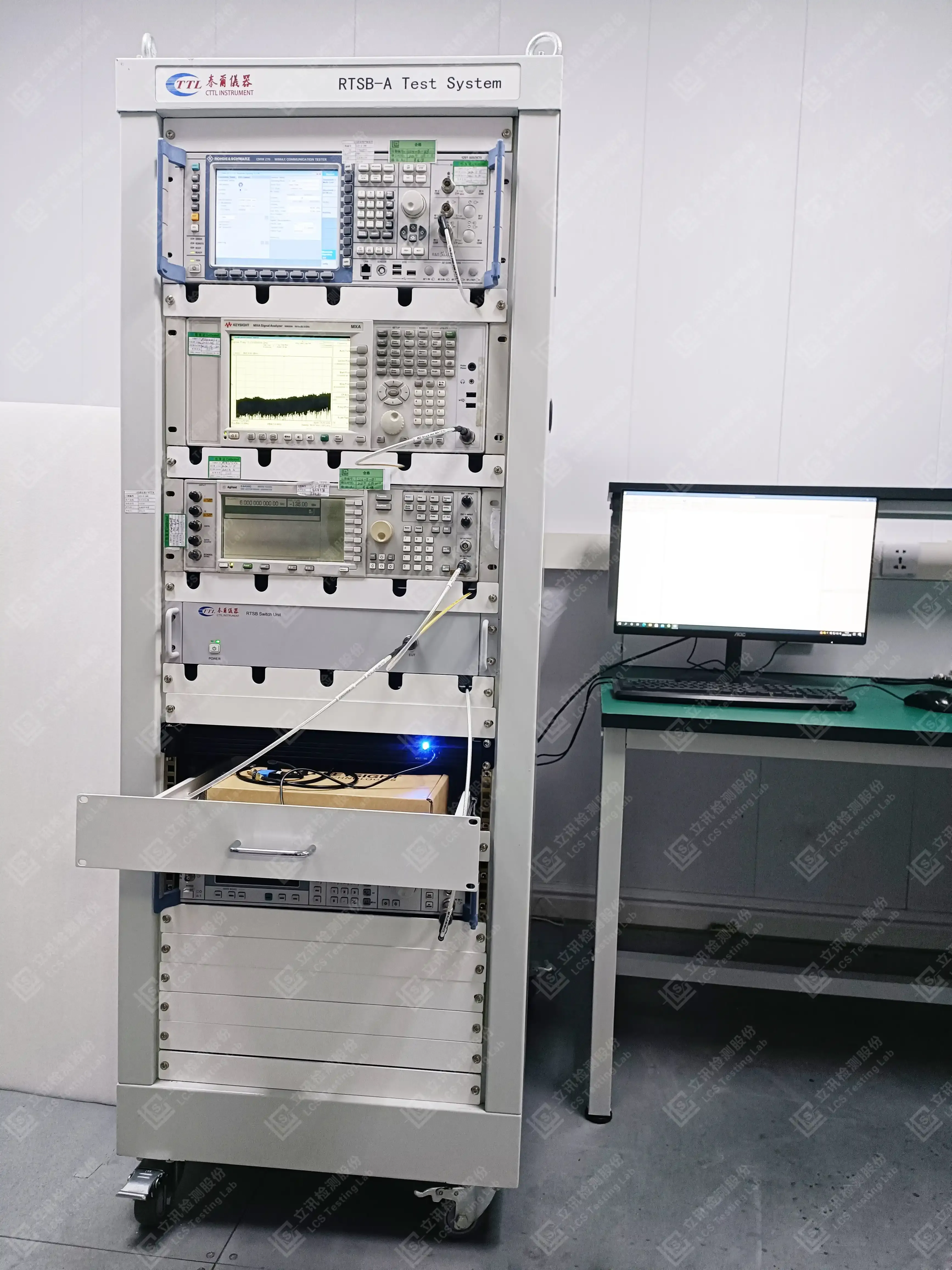
LCS's Bluetooth testing laboratory in Shenzhen supports Bluetooth product testing and the associated radio testing (such as EN 300 328 and EN 301 489); whether a project also requires Bluetooth SIG qualification steps, and how the laboratory can support the qualification process, should be confirmed with the laboratory for each product. Qualification testing pairs naturally with the laboratory's Wireless Testing service, which covers RF and wireless product evaluation for market access, so manufacturers can plan the SIG track and the regulatory track together.