
Oct 13, 2026Certification Guides
CE EMC Compliance Guide: Preparing Electronics for the EU Market
What the EU EMC Directive 2014/30/EU requires, why EMC is often the hardest part of CE marking, and how manufacturers prepare before export.
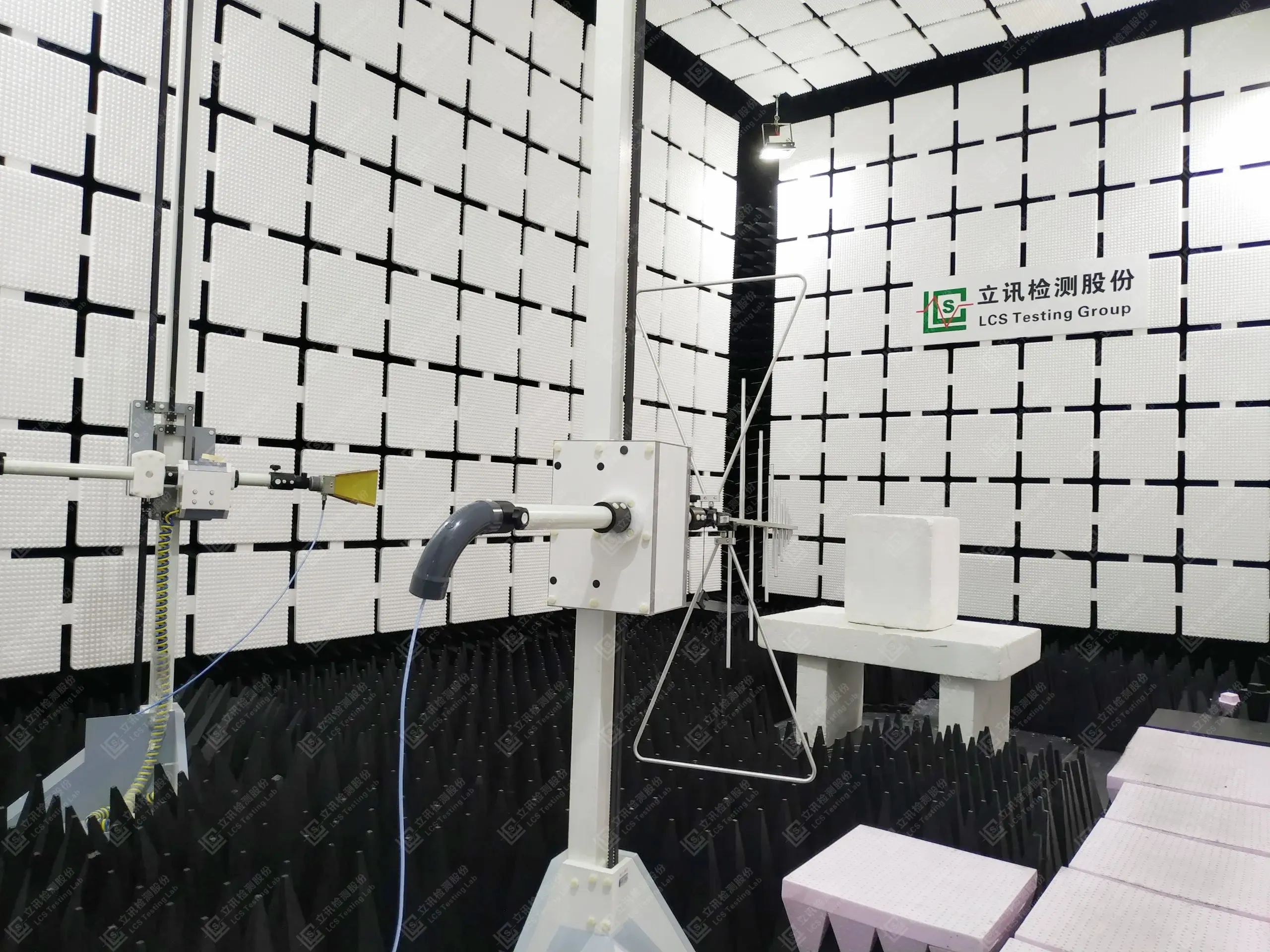
CE marking is not one requirement but several, and electromagnetic compatibility (EMC) is a frequent place where export projects stall — a common observation in laboratory practice, not a statistic. What does EU law actually require, and why does EMC resist shortcuts?
What the EMC Directive Requires
Directive 2014/30/EU — the Electromagnetic Compatibility Directive — has applied since 20 April 2016, replacing Directive 2004/108/EC, and covers electrical and electronic equipment placed on the EU market: individual products ("apparatus") and fixed installations assembled on site.
The essential requirements are general: equipment must not generate electromagnetic disturbance that prevents radio and telecommunications equipment, or other equipment, from operating as intended, and its immunity must allow it to operate as intended in its environment — a product must limit what it emits and withstand what it meets.
Not everything electronic falls under it: radio equipment within the scope of the Radio Equipment Directive — products that intentionally transmit or receive radio waves, such as Wi-Fi and Bluetooth devices — is excluded, because that directive carries equivalent EMC requirements; inherently benign equipment and aeronautical products also sit outside.
One Product, Several EU Laws
Several instruments can apply to one product, each assessed separately. The Low Voltage Directive 2014/35/EU, applicable since 20 April 2016, covers equipment rated 50–1,000 V AC or 75–1,500 V DC, so many mains-powered products sit under both it and the EMC Directive. Radio products follow the Radio Equipment Directive 2014/53/EU, combining safety, EMC and radio-spectrum requirements. RoHS restricts ten substances, including four phthalates added in 2015, and ecodesign or energy-labelling rules apply where a product-specific measure exists.
Meeting one instrument does not discharge the others: a single EU declaration of conformity covering all applicable acts is drawn up (it may take the form of a dossier of individual declarations), but the evidence for each still has to exist.
EMI and EMS in Plain Terms
EMC work splits into two families of tests. EMI — electromagnetic interference, or emissions — is what the product sends out: conducted noise along cables, and radiated fields leaving through seams, openings and connected wiring. Limits exist because a switching power supply or a badly routed clock line can disturb radios, sensors and neighbouring equipment. EMS — electromagnetic susceptibility, or immunity — is what the product withstands: electrostatic discharge, fast transients, surges, and conducted or radiated radio-frequency fields. An immunity failure shows as a flickering display, a controller that resets, or a drifting reading. A product must pass both sides.
Why EMC Is Often the Hardest Item
Requirements verifiable by inspecting construction — insulation distances, component ratings, enclosure design — tend to pass once the build is correct. EMC is different: it is a property of the assembled product in operation, not of a drawing. Results depend on the whole machine: the power supply and its filtering; PCB layout, grounding and return paths; cable routing and bonding; the enclosure's material and openings; and firmware behaviour under disturbance.
That is why a component with its own test evidence is not evidence for the product built from it, and why production changes — a new supply vendor, a re-routed board, a shorter cable — shift performance. The configuration tested has to be the configuration shipped.
The Conformity Route
Under the directive, the manufacturer performs an EMC assessment and remains fully responsible for it; no notified body or external laboratory is required. Compliance can be shown by applying harmonised standards, by the manufacturer's own detailed methodology, or by a mixture; a standard listed in the Official Journal gives a presumption of conformity.
Selection follows a hierarchy — product-specific, then product-family, then generic standards. Multimedia and IT/AV equipment typically falls under EN 55032 (emissions) and EN 55035 (immunity); household appliances and electric tools under the EN 55014 family; lighting under EN 55015 and EN 61547; where no family standard exists, the EN 61000-6 generic standards apply, with EN 61000-3-2 and EN 61000-3-3 covering harmonic currents and flicker. More than one standard is often needed.
Standards are revised and the Official Journal list changes; a superseded standard normally keeps its presumption of conformity for a transition period of roughly 18 to 36 months. A notified body may be involved voluntarily through EU-type examination, which does not transfer responsibility.
Technical Documentation, Declaration and CE Marking
Whatever route is chosen, the manufacturer builds technical documentation that makes compliance assessable: product identification, a general description, design and manufacturing drawings, an explanation of operation, a dated list of the standards applied with the results obtained (or, where standards are not applied, a detailed EMC assessment), test reports and calculations. The documentation and the EU declaration of conformity are kept for ten years after the equipment is placed on the market; where the manufacturer is outside the EU, the importer keeps a copy and must make the documentation available to authorities.
The declaration is issued under the manufacturer's sole responsibility and lists the instruments and standards it covers. The CE marking is affixed visibly, legibly and indelibly to the product or its data plate or, if impossible, to the packaging and documents. Market surveillance authorities can request evidence at any time and may order withdrawals, recalls or sanctions.
Pre-Compliance Testing: The Design-Stage Filter
Pre-compliance testing means testing early, on prototypes, against the intent of the applicable standards, before the formal test that will support the technical file. It is not a substitute for the formal test, but it moves discovery to the design phase, when a filter or a cable route can still be changed without touching tooling or production. A useful programme covers the main emissions and immunity phenomena, uses the worst-case configuration — enclosure closed, cables and interfaces connected as in real use — and reports thin margins, so the formal test confirms rather than surprises.
A Preparation Checklist
Map every EU instrument that applies: EMC Directive for non-radio electronics; Low Voltage Directive where voltage limits are met; Radio Equipment Directive for radio products, instead of EMC; RoHS; ecodesign or energy-labelling measures where relevant.
Confirm scope early: representative configurations, and whether any exclusion applies.
Select standards through the hierarchy; check current status and transition dates in the Official Journal list.
Run pre-compliance tests at prototype stage against the intended standards, in the worst-case configuration.
Treat EMC as a design variable: power-supply filtering, grounding and return paths, cable screening and routing, connector bonding, enclosure shielding.
Freeze the tested configuration; review the EMC evidence whenever supply, board, cabling or firmware changes.
Build the technical documentation during the project and retain it for ten years; issue the declaration of conformity and affix the CE marking with importer details.
Monitor standard updates and re-assess when standards or the product change.
How LCS Supports This Work
LCS's EMC laboratory in Shenzhen tests emissions and immunity for consumer electronics, lighting and IT/AV equipment, covering the EN 55032/55035 families, the EN 61000 series, and the EN 55015 and EN 61547 families for lighting products. The EMC Testing service page on this site describes the testing scope, and the sample information the laboratory asks for — product specification, manual, power supply details and working samples with support equipment. Send your product type, target market and intended configurations to plan the test programme. Testing produces reports; the EMC assessment, technical documentation, declaration of conformity and CE marking remain with the manufacturer.
FAQ
Does every electronic product need EMC testing for the EU?
Products in scope must comply with the directive's essential requirements, and the manufacturer must perform an EMC assessment; testing against harmonised standards is the usual way to support it. Radio products follow the Radio Equipment Directive instead.
Is a test report the same as a CE mark?
No. The CE marking is the manufacturer's declaration that the product meets the applicable legislation; test reports and technical documentation are the evidence behind it.
How long does a test report remain valid?
It reflects the product, configuration and standard edition tested; if any of these changes, the assessment is reviewed.