
Oct 12, 2026Certification Guides
EMC Remediation Services: How EMC Failures Get Diagnosed and Fixed
How EMC remediation works as a service: pre-scan and diagnosis, practical fixes and verification retesting, plus what to prepare and how to choose a lab.
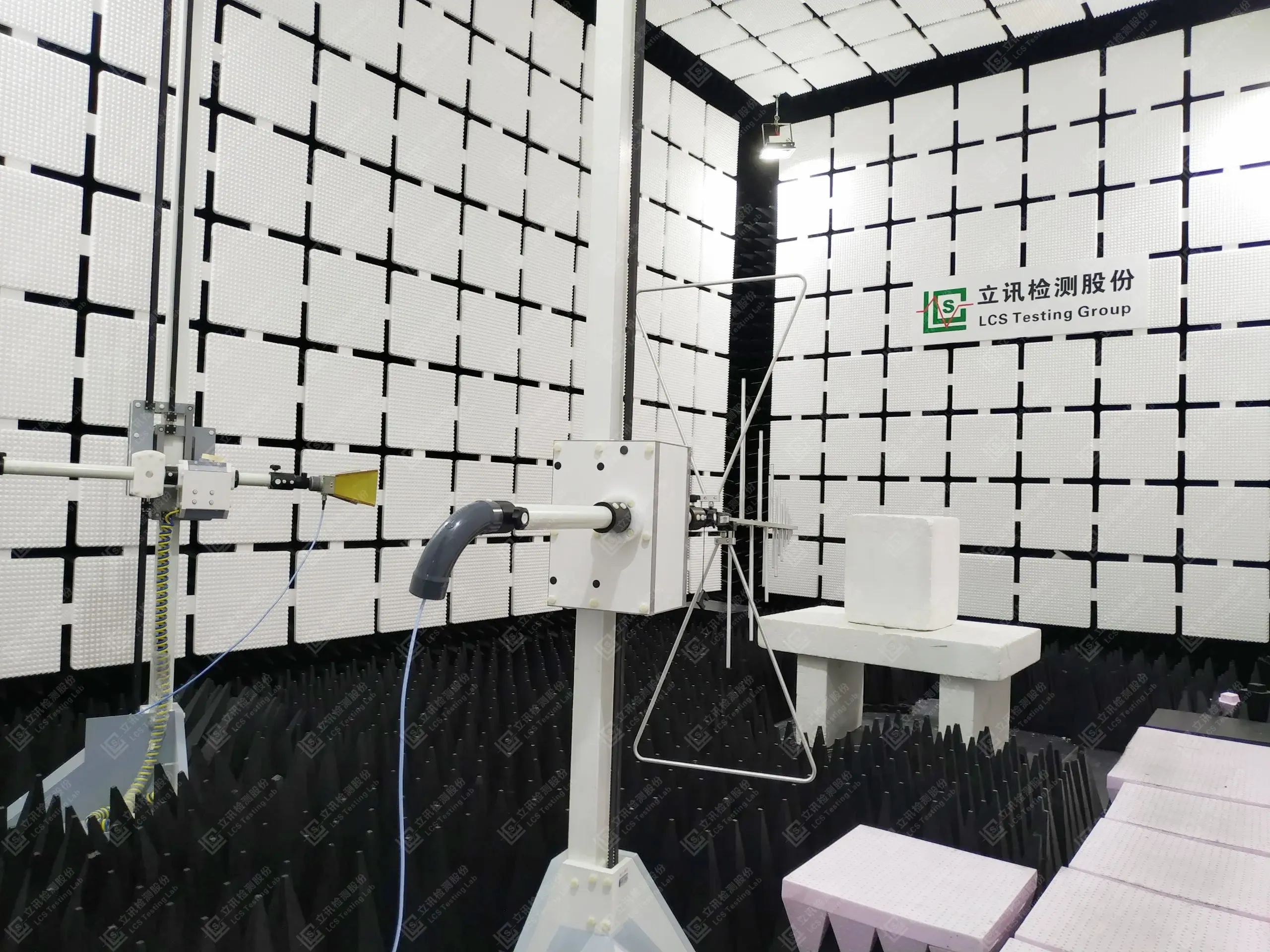
A product fails radiated emissions at a cluster of frequencies, or an immunity test upsets it while everything else passes. EMC remediation is the engineering work between that result and a product that meets the limits. This article covers when remediation is needed, what it involves and how such projects are usually organized.
Pre-Compliance, Compliance Testing and Remediation
Pre-compliance testing (a pre-scan). Early diagnostic measurement with compliance-style instrumentation, typically a receiver, LISN and antennas — for information, not evidence. It shows which bands are risky and how much margin a design has while changes are cheap, and does not replace formal testing.
Compliance testing. Formal measurement of the final configuration against the standard for the product's market, such as CISPR emissions limits or IEC 61000-4 immunity tests. Certification bodies and buyers rely on the report, which covers the configuration tested; certificates come from certification bodies, not the lab.
Remediation. Diagnostic and corrective work after a failure or thin margin: finding which part of the design is responsible and which changes bring the product within limits. Some fixes can only be made by the manufacturer's design team, and retesting proves the result.
When Manufacturers Need EMC Remediation
A failed test is the direct trigger; remediation also helps earlier:
A formal test failed. The report shows where limits are exceeded, not why; diagnosis turns data into design decisions.
Immunity testing upsets the product — resets, glitches, dropouts — often tracing to I/O ports, grounding or firmware.
Results are borderline. A small margin can flip through production spread or a different cable.
The product is in development. A pre-scan finds problems at the cheapest stage.
Why Products Fail: How Engineers Narrow It Down
Engineers look for the dominant coupling path — source, route and radiator — because that decides which fix is worth doing.
Switching power supplies. Converters generate noise at the switching frequency and its harmonics, and fast edges add broadband content. Filters, snubbers, transformer construction and power-stage grounding all play a part.
Cables as antennas. Unshielded cables carrying common-mode current radiate efficiently; routing or length alone can turn a pass into a fail. Ferrites, shield termination and connector pinout often beat PCB changes.
Grounding and ground loops. Multiple ground paths form loops that couple noise. Separating grounds, bonding shields at one or both ends or changing chassis grounding is a system-level decision; a fix in one place can expose a problem elsewhere.
Filtering. Common-mode chokes and differential-mode inductors, with X capacitors across the line and Y capacitors to ground, are the standard input toolkit. Y-capacitor values are limited by leakage current, and placement decides much of what the filter achieves.
Enclosure and shielding gaps. Emissions escape through vents, slots, cable penetrations and seams; the longest dimension of an opening matters relative to frequency. Gaskets, seam bonding, screw spacing and coatings are common remedies; plastic enclosures shift the burden onto PCB and cables.
PCB layout. Loop areas, broken return paths, decoupling placement, clock routing and layer stackup all shape emissions. Layout changes are invasive, so simpler measures come first — and no fix is universal.
The Remediation Process as a Service
A typical engagement follows the same arc; iteration is normal, not a sign of trouble.
1. Inquiry. Describe the failure, share test data and agree the session's goal; the laboratory confirms what to bring.
2. Reproduction. The product is set up close to the original test configuration, and the failure is reproduced.
3. Diagnosis. Near-field probing, current probes and staged experiments — adding a ferrite, covering a vent — show which coupling path dominates.
4. Remediation. The findings become ranked options — filtering, cable treatment, grounding or layout changes — and the agreed measures are implemented on the sample, with each modification recorded.
5. Iteration. Modified samples are re-measured; suppressing one band can reveal another. Rounds depend on the product and how fast changes can be made.
6. Verification, report, then formal testing. With limits met and margin shown, the laboratory issues a remediation report documenting the changes made, and the final configuration goes to compliance testing — which verification supports but does not replace.
What to Prepare for a Remediation Session
Requirements depend on the project; a typical package includes:
The product as it failed, with the accessories used in the original test.
The power supply and cables as shipped; a substitute cable invalidates comparisons.
Typical loads for ports normally connected to other equipment.
The previous test report or failure data: which test failed, at what frequencies and conditions.
Schematics or layout files where sharing is possible, under a confidentiality arrangement if needed.
Notes on changes since the last test.
LCS Remediation Support
LCS provides EMC testing at its EMC laboratory in Shenzhen, covering emissions and immunity for consumer electronics, lighting and IT/AV equipment. When a product fails EMC testing or has thin margins, customers provide the failure data and sample units, and LCS's EMC engineering team carries out the remediation work on those samples as a project-based service. Remediation is not offered as a standalone pre-scan; the work is engaged per project. Once the fixes are complete, the laboratory verifies the result by measurement and issues a remediation report documenting what was changed, so the customer has a clear record of the modifications made. The EMC Testing page on this site describes the testing scope.
How to Evaluate a Lab for Remediation Support
Remediation support differs from testing capacity; the difference matters when choosing a lab:
In-house EMC facilities. Diagnosis is iterative; in-house measurement runs experiments in one session, while outsourced measurement waits on another schedule.
Engineering experience. Ask who will work on the product and what they have debugged; running tests and diagnosing failures are different skills.
Iterating with your design team. Efficient arrangements keep the lab and your engineers in one conversation between rounds.
Report quality. Useful output shows measured evidence and ties each recommendation to it; setup, cables and configuration must stay fixed so verification between rounds is comparable.
Agree the scope before work starts — what is delivered, what is needed from you and how extra rounds are handled.
FAQs
Can a laboratory fix my product, or must my engineers do it?
Usually both. The laboratory can diagnose the failure, demonstrate that measures work and verify a modified sample. A fix involving layout, components or mechanics, though, must come from the team owning the design — settle early who on your side can approve changes between rounds.
How long does remediation take?
No honest figure exists before diagnosis; any number quoted up front is a guess. Timing depends on how many problems contribute, how invasive the changes are and how fast modified samples arrive.
Do you guarantee the product will pass after remediation?
No, and no laboratory should guarantee it. Passing depends on the final design, the margin achieved and the configuration tested; a fix can suppress one emission and shift energy elsewhere. What a lab can do: identify the dominant problem, demonstrate effective measures and verify the remedy before formal testing.
Can remediation proceed without the original design team?
It can start without them — diagnosis needs the product and its test history, not the original engineers. Implementation differs: without someone able to change the design, the result is recommendations, not a modified product. A clear diagnosis still helps any capable engineer, but iteration is slower.