Oct 11, 2026Certification Guides
FCC Certification vs FCC SDoC: Which Authorization Route Applies to Your Product?
How FCC SDoC and TCB certification differ: which products take which route, what each asks of manufacturers, and the FCC ID and labeling implications.
Manufacturers heading for the United States often speak of "FCC certification" as though it were a single stamp. Under FCC rules there are two equipment authorization routes — the Supplier's Declaration of Conformity (SDoC) and Certification — and which one applies depends on what your product does with radio energy. The routes differ in who completes the authorization, what evidence is retained, and whether the product carries an FCC ID. This comparison covers both routes, the families each typically serves, and the work each asks.
The Two Routes at a Glance
Who completes the authorization — SDoC: the responsible party declares compliance after testing. Certification: a Telecommunication Certification Body (TCB) grants certification under FCC authority.
Typical product families — SDoC: most unintentional radiators such as digital devices, power supplies, LED drivers and many receivers. Certification: most intentional radiators such as Wi-Fi, Bluetooth and other transmitters.
FCC ID — SDoC: no FCC ID. Certification: yes, a grantee code plus a product code.
US presence — SDoC: the responsible party must be located in the United States. Certification: an overseas applicant must designate a US agent for service of process.
Where the evidence lives — SDoC: test records kept by the responsible party, produced on request. Certification: application and test data reviewed by a TCB, grant listed in the FCC's database.
Which Products Typically Take Which Route
Intentional radiators — devices that transmit on purpose, such as Wi-Fi, Bluetooth, sub-GHz remotes and cellular products — generally require Certification through a TCB before marketing. The rules reserve SDoC for a narrow set of transmit cases, such as carrier-current systems and certain low-frequency, low-emission devices, so most transmitters cannot choose the declaration route. The rule part governing your radio technology decides the question.
Unintentional radiators — digital circuits, switching power supplies, LED drivers and many receivers that do not transmit deliberately — are typically authorized under SDoC. For most of these categories the rules permit either SDoC or Certification; a few devices, such as scanning receivers and radar detectors, must be certified, and some are exempt entirely. A supplier may also elect Certification voluntarily when SDoC would suffice.
Many modern products combine both classes: in a connected luminaire, the transmitter follows the certification route while driver and control circuitry is authorized on its own terms, and both requirements apply to the composite product. One current point: equipment produced by entities on the FCC's Covered List must use Certification even where SDoC would otherwise apply.
What SDoC Involves for the Manufacturer
Under SDoC, the responsible party — which must be located in the United States, typically the manufacturer, assembler, importer, or a retailer or OEM acting by agreement — declares compliance after testing the product against the applicable technical rules. No submission to the FCC is required unless the Commission specifically requests one, and the product receives no FCC ID.
The responsible party retains the technical records: design documentation, production testing procedures and the measurement data behind the declaration. A compliance information statement must travel with the product — generally in the user manual or on a separate sheet — identifying the product, stating compliance, and giving the US responsible party's contact details. Part 15 products also carry the standard interference statement.
What Certification Involves for the Manufacturer
Certification is applied for in writing to a TCB, which reviews the test data and exhibits, files the application with the FCC, and — if it accepts the showing — issues a grant under FCC authority. The applicant signs certifications covering the accuracy of its statements and its status relative to the Covered List, and the test data must be signed by the person who performed or supervised testing.
A foreign manufacturer can apply without a US subsidiary but must designate a US agent for service of process. On grant, an FCC ID is formed from the grantee code assigned by the FCC and a product code chosen by the grantee. The grant covers production units identical to the tested sample, with defined procedures for later changes. TCBs must be accredited for the equipment scope they certify and operate under US designation or mutual recognition arrangements.
FCC ID and Labeling Implications
Only the Certification route produces an FCC ID. It appears as the letters "FCC ID" followed by the grantee code and product code, printed legibly and permanently affixed where the purchaser can see it; devices too small for normal labeling may carry it in the manual with a note on the packaging, and display-equipped products may use electronic labeling.
SDoC products carry no FCC ID; their compliance marker is the Part 15 statement and the information supplied with the product, so labeling should be settled before mass production.
Common Misconceptions
"FCC certification" is often used loosely. Products authorized under SDoC are not certified, hold no grant and carry no FCC ID; the declaration is made by the responsible party.
A test report is evidence, not an authorization. SDoC requires a US-located responsible party to declare and keep records; Certification requires a TCB grant.
SDoC is not a way to avoid Certification where the rules require it, and Certification is not a penalty for SDoC-eligible products. Route assignment follows the equipment class and rule part.
A certified radio module does not automatically clear the finished product, and an FCC ID is not a quality mark: it ties a product to its grant and tested configuration, and changes outside that scope can require further authorization steps.
FAQ
Does my product need an FCC ID? Only if its route is Certification. SDoC products normally ship with a compliance statement and records rather than an FCC ID.
Can a Bluetooth or Wi-Fi product use SDoC? Generally not — intentional radiators are certified, subject to narrow exceptions. A pre-test review confirms the rule part and route for your transmitter.
We already have a test report. Are we authorized? Not automatically. SDoC needs a declaration and records from a US-located responsible party; Certification needs a TCB grant before marketing.
Can an overseas manufacturer obtain certification? Yes — with a US agent for service of process designated as part of the application.
How LCS Supports FCC Projects
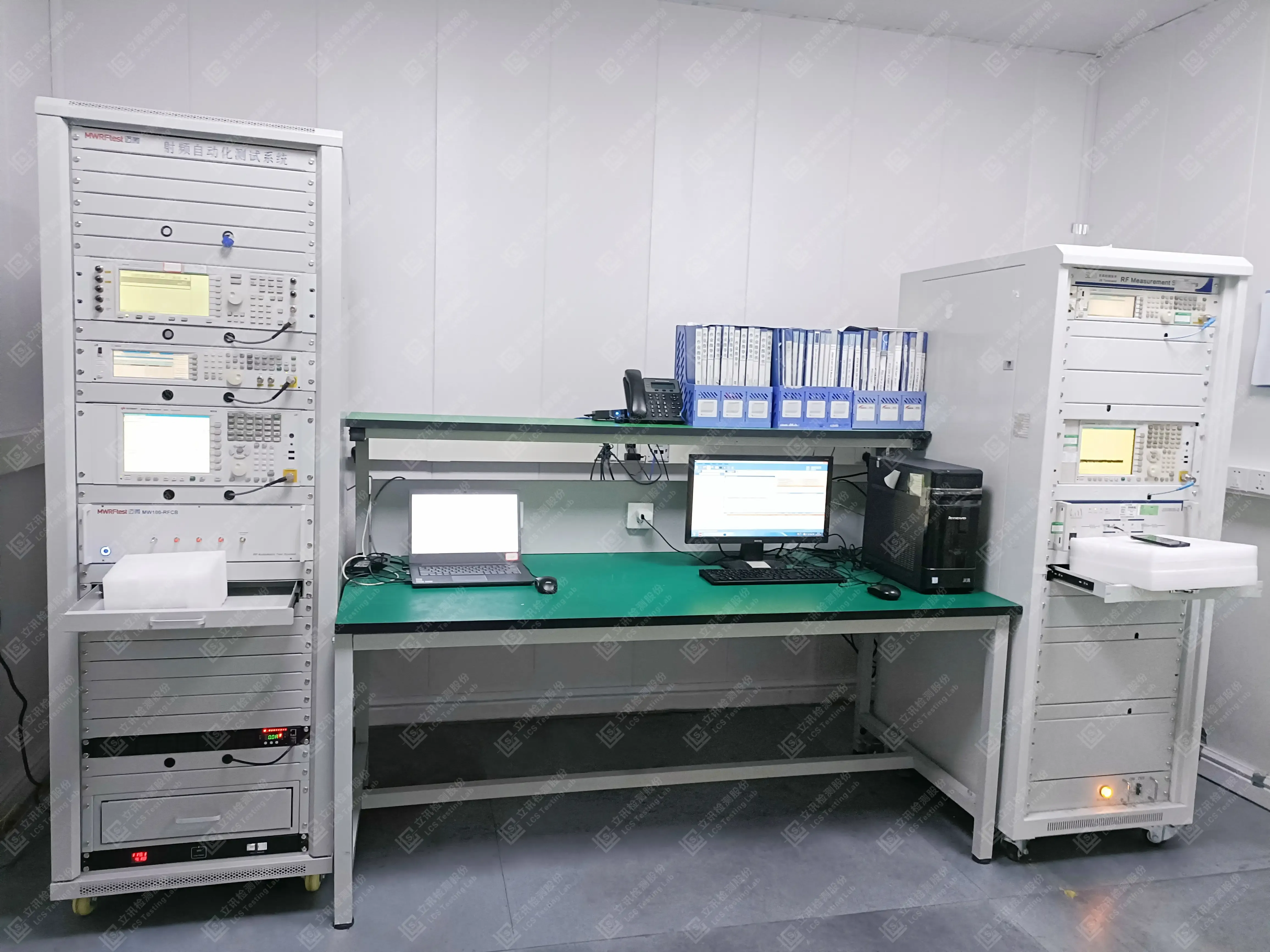
LCS is an independent third-party testing laboratory with RF and EMC laboratories in Shenzhen, and its CNAS-accredited scope includes FCC Part 15 testing. The RF laboratory tests Bluetooth, Wi-Fi, IoT and other short-range transmitters for US market projects; LCS issues test reports, while the certification grant itself is issued by a TCB. The lab supports manufacturers from radio review and test planning through sample testing and final documentation, including the evidence packages SDoC responsible parties and TCB applicants rely on. The Wireless Testing service page on this site describes this coverage; send your product specification, radio details and target market for a test proposal.