
Oct 15, 2026Testing Standards
PPWR Compliance Checklist for Exporters: Five Workstreams from Testing to EPR Registration
The practical route to PPWR compliance: five workstreams from packaging testing to EPR registration, plus the pitfalls the official FAQ flags.
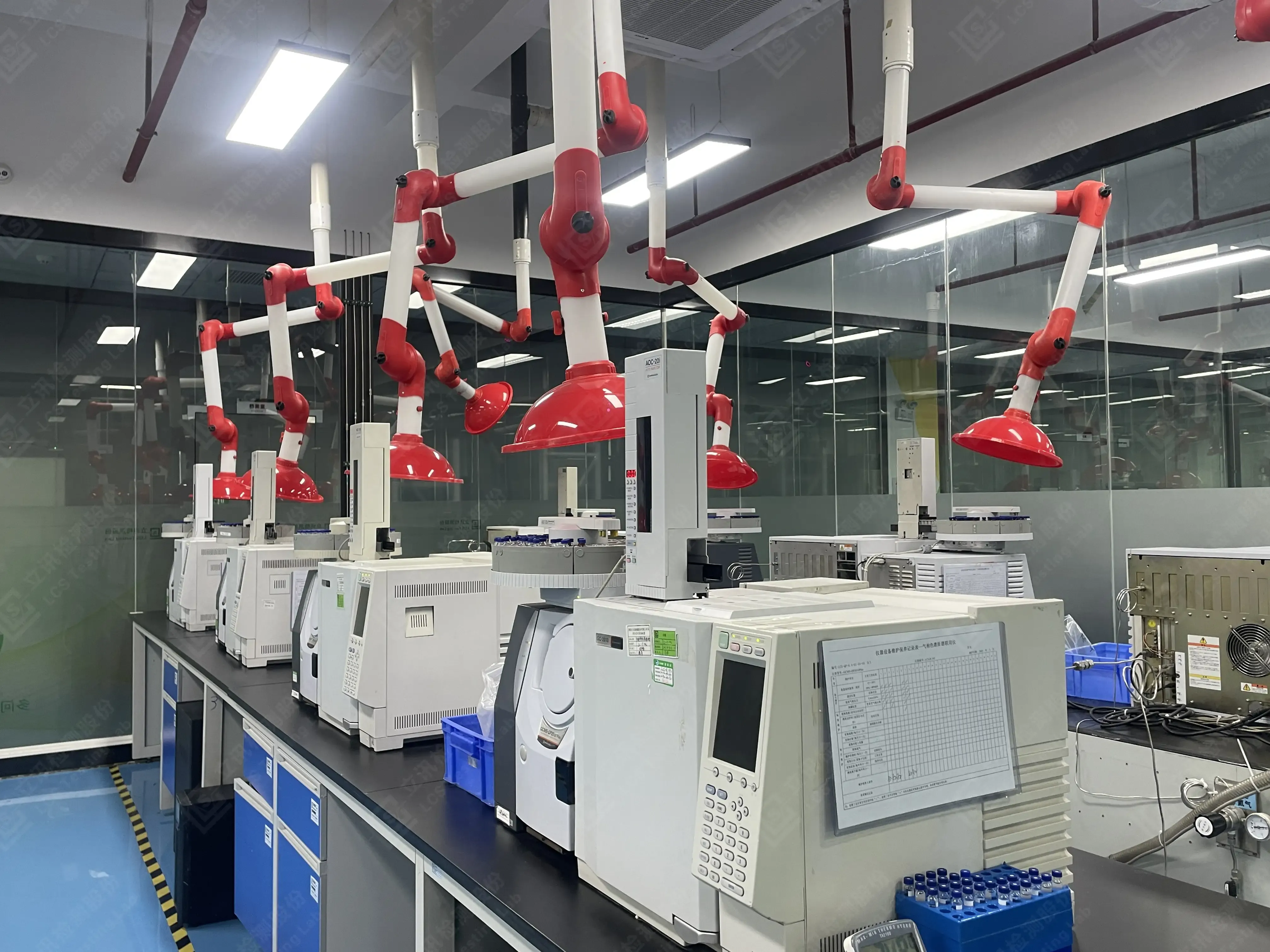
This is the practical companion to the regulation explainer on this site: the five workstreams an exporter has to complete, who carries what, and the traps the European Commission's official FAQ flags. Sales, grouped and transport packaging are all in scope — every layer around the product, not just the box the consumer sees.
Workstream 1: Test the Packaging Materials
Two substance limits are already live (alongside the general duty to minimise substances of concern under Article 5(1)). First, Article 5(4): the sum of lead, cadmium, mercury and hexavalent chromium in packaging or packaging components must not exceed 100 mg/kg. This applies to all packaging, not only food contact. Second, Article 5(5): from 12 August 2026, food-contact packaging may not be placed on the EU market with PFAS at or above 25 ppb for any PFAS (targeted analysis, polymeric PFAS excluded), 250 ppb for the sum of PFAS, or 50 ppm including polymeric PFAS. Above 50 mg/kg total fluorine, the supplier must provide proof of the fluorine content on request.
Practical steps: list every component — board, film, closures, labels, and the inks, varnishes, glues and adhesives applied to them; collect supplier composition declarations first; commission laboratory testing where documentation is missing or risk is material. Article 5(4) sets the heavy-metals limit at the level of the packaging or packaging components, so plan heavy-metals testing at component level; for the PFAS limits the Commission FAQ confirms the assessment applies to the packaging unit as a whole, including the associated inks, varnishes, glues and adhesives.
Workstream 2: Assess Recyclability
Recyclability grades A to C will condition placing on the market from 1 January 2030, or 24 months after the design-for-recycling delegated acts enter into force — whichever comes later; those acts are due by 1 January 2028. Recycled-at-scale requirements follow from 1 January 2035, and only grades A or B will be accepted from 1 January 2038. Grading is not yet a daily obligation, but the assessment will have to be documented, and designs that fail take time to change.
Practical steps: run a baseline assessment on main packaging lines now, using current European standards (EN 13430 among them) as guidance. Under PPWR the old harmonised standards no longer create a presumption of conformity; new PPWR standards will restore it once cited in the Official Journal. Assess per packaging unit, including integrated components such as labels and closures.
Workstream 3: Build the Technical Documentation
Conformity assessment follows Annex VII Module A — internal production control — and the manufacturer must establish the technical documentation. It must allow assessment of conformity and include, where relevant: a general description and intended use; conceptual design, manufacturing drawings and materials of components; the standards or specifications applied; a qualitative description of how the recyclability, minimisation and reusability assessments were carried out; and test reports. It is kept for five years (single-use packaging) or ten years (reusable) from placing on the market.
This workstream depends on the supply chain. Article 16(1) requires suppliers to provide the manufacturer with all information and documentation necessary to demonstrate conformity — the FAQ states they cannot refuse. For packaging manufactured before 12 August 2026 — including stock — if a supplier has disappeared or will not cooperate, the FAQ directs best efforts: ask the former supplier or any successor company, or make own assessments. For new production, Article 16(1) governs the supplier duty. One limit: the technical documentation obligation cannot be delegated to an authorised representative.
Workstream 4: Draw Up the Declaration of Conformity
The declaration of conformity is drawn up for each packaging type and identifies what it covers. It states that the requirements of Articles 5 to 12 are fulfilled, follows the Annex VIII structure, and must be kept updated. By drawing it up, the manufacturer assumes responsibility for compliance — which cannot be transferred by contract.
The DoC is issued by the manufacturer, or by an authorised representative under a written mandate — but responsibility remains with the manufacturer. A testing laboratory can produce test reports and support preparation; it does not sign the declaration. Where other EU acts already require a declaration — for example food-contact materials rules — one declaration may cover all of them, as a dossier of individual declarations.
Workstream 5: Complete EPR Registration
Extended producer responsibility sits with the "producer" — the party that first makes packaging or packaged products available on a Member State's territory, or unpacks them without being an end user. In B2B imports that is typically the EU importer, not the overseas factory. The producer must register in each Member State where it first makes packaging available; there is no general micro-enterprise exemption. Producers placing under 10 tonnes a year on a Member State's market have fewer reporting obligations.
Timing has two layers. National rules that predate PPWR continue to apply — many Member States already had registers, so confirm the rules in each country of sale. Under the harmonised system, national registers are established after the Commission's implementing act on the register format, and producers will report under the new rules for the first time by 1 June 2030, per the official FAQ. From the application date, producers may not make packaging available if they are not registered where a register applies.
Who Is Responsible for What
Brand owner / manufacturer. Conformity assessment, technical documentation, DoC, design, and the identifier and manufacturer details on the packaging.
Contract factory (OEM). Produces the packaging or packaged product; the brand owner under whose name or trademark it is made remains the manufacturer.
Packaging supplier. Must supply the information and documentation the manufacturer needs (Article 16(1)).
Importer. Verifies that the manufacturer has completed the conformity assessment and drawn up the DoC and documentation, and shows its own name and address; usually the EPR producer.
Distributor. Acts with due care; checks that the producer is registered and the packaging labelled. No manufacturer duties.
Authorised representative. Supports communication and keeps documents available to authorities under mandate; cannot take over legal responsibility, and the technical documentation cannot be delegated to it.
Six Pitfalls the Official FAQ Highlights
Placed-on-market timing, not production date, decides. Packaging already placed on the EU market before the application date can stay. Warehouse stock not yet placed on the market must comply when it is placed — but it does not have to be destroyed, remanufactured or re-labelled.
Accompanying documents are narrower than they look. For packaging produced before 12 August 2026 and still in stock, the unique identifier and manufacturer details may go in an accompanying document. For packaging manufactured after that date, that route only applies where affixing the information on the packaging is not possible.
Enforcement starts with correction, not bans. Under Article 62, a Member State that finds non-compliance must first require the operator to end it and give an opportunity to correct, before prohibition, recall or withdrawal can follow. Enforcement should not disrupt trade flows — but that is not a deadline extension.
The identifier is not per unit. The identifier may refer to a packaging type or production batch, not each item, and one component of a unit can carry it; manufacturers choose freely among type, batch or serial number.
Transport packaging is not exempt. Pallets, pallet collars, wrappings and straps are separate packaging types requiring their own assessments and their own declarations of conformity.
Voluntary schemes are not the legal route. Recycling-content or chain-of-custody certificates can support the file, but the legal evidence is the Annex VII technical documentation and the DoC — certificates are inputs, not compliance.
How LCS Supports This Work
LCS testing Lab provides one-stop support along this path, covering packaging material testing (heavy metals; PFAS for food-contact packaging), recyclability assessment support, technical documentation preparation support, DoC preparation support, and EPR registration support. Testing produces test reports; the conformity assessment, technical documentation and declaration of conformity remain the manufacturer's legal responsibility, and the DoC is signed by the manufacturer or their authorised representative — never by the laboratory. EPR registration is completed in the producer's name in each Member State; LCS can coordinate and support the process. The Chemical Testing service page on this site describes the laboratory's scope; share your packaging structure and target markets to plan the testing.