
Oct 12, 2026Testing Standards
PPWR Compliance Guide: What Regulation (EU) 2025/40 Means for Packaging
What Regulation (EU) 2025/40 requires: recyclability, recycled content targets, PFAS limits and key dates, plus what exporters should prepare and test.
Regulation (EU) 2025/40 on packaging and packaging waste — commonly shortened to PPWR — replaced the EU's 1994 Packaging and Packaging Waste Directive with a directly applicable regulation. It entered into force on 11 February 2025 and applies from 12 August 2026. The rules take effect uniformly across Member States, and follow packaging used around imported goods.
Scope and Who Carries the Obligations
All packaging placed on the EU market is in scope, whatever its material. "Placing on the market" means the first making available of packaging, empty or around a product, so packaging produced outside the EU for goods placed on the EU market is covered. An EU importer may not place packaging on the market until the manufacturer has completed the conformity assessment and drawn up the technical documentation. The manufacturer makes packaging or a packaged product, or has either made under its own name or trademark; the producer — broadly the party that first makes packaging available in a Member State — holds extended producer responsibility (EPR). For the immediate packaging of medicinal products, and certain medical device packaging, specific requirements - the recyclability conditions and recycled content targets among them - do not apply, in some cases conditionally; this exempts those requirements rather than placing the packaging outside the Regulation.
Recyclability Requirements
All packaging placed on the market must be recyclable. Two conditions apply: packaging must be designed for material recycling, and — later — it must be collected, sorted and recycled at scale. Recyclability is expressed in performance grades A, B or C under Annex II. From 1 January 2030, or 24 months after the design-for-recycling delegated acts enter into force (whichever is later), packaging must fall within grades A, B or C; from 1 January 2038 only grades A or B. The recycled-at-scale condition applies from 1 January 2035. Those delegated acts, due by 1 January 2028, define the detailed criteria — so several 2030 deadlines can shift later.
Recycled Content Targets for Plastic Packaging
Minimum recycled content applies to the plastic parts of packaging, as an average per manufacturing plant and year:
Recycled content targets for plastic packaging (minimum, as an average per manufacturing plant and year): contact-sensitive PET excluding beverage bottles - 30% by 2030 and 50% by 2040; contact-sensitive other plastics excluding beverage bottles - 10% by 2030 and 25% by 2040; single-use plastic beverage bottles - 30% by 2030 and 65% by 2040; other plastic packaging - 35% by 2030 and 65% by 2040.
The 2030 figures apply from 1 January 2030, or three years after the calculation and verification methodology implementing act (due by 31 December 2026), whichever is later. Recycled content must come from post-consumer plastic waste collected and recycled under the Regulation's conditions; plastic parts below 5% of a packaging unit's weight and compostable packaging are among the exceptions.
Minimisation, Substances of Concern and Single-Use Formats
From 1 January 2030, packaging must be reduced to the minimum weight and volume necessary for its function, assessed against Annex IV criteria; grouped, transport and e-commerce packaging face a 50% maximum empty space ratio, applied from 1 January 2030 or three years after the implementing act due by 12 February 2028, whichever is later. Article 5 requires substances of concern to be minimised and sets two firm provisions. The sum of lead, cadmium, mercury and hexavalent chromium in packaging or packaging components must not exceed 100 mg/kg. From 12 August 2026, food-contact packaging may not be placed on the market if it contains PFAS at or above 25 ppb for any PFAS (targeted analysis, polymeric PFAS excluded), 250 ppb for the sum of PFAS, or 50 ppm including polymeric PFAS — unless another EU act already prohibits it. Above 50 mg/kg total fluorine, the supplier must provide evidence of the fluorine content on request.
Also from 1 January 2030, Annex V restricts certain single-use plastic formats: grouped packaging such as shrink wrap; packaging for unprocessed fresh fruit and vegetables under 1.5 kg; food and drink packaging filled and consumed on HORECA premises; individual portions of condiments and sauces in the HORECA sector; single-use hotel toiletry packaging; and very lightweight carrier bags, with limited exemptions.
Labelling, Reuse, Refill and EPR
A harmonised, pictogram-based label showing material composition becomes mandatory from 12 August 2028 or 24 months after the labelling implementing acts, whichever is later; reusable packaging must carry a reusable label from 12 February 2029 or 30 months after the labelling implementing act, whichever is later. Re-use targets start on 1 January 2030: at least 40% of specified transport packaging must be reusable within a re-use system, with further targets for grouped packaging and beverages. From 12 February 2027, take-away businesses must let customers bring their own container for filling at no higher cost. EPR obligations sit with producers: registration in each Member State where they first make packaging available, plus contributions covering collection and recycling costs.
Key Dates at a Glance
22 January 2025 - published in the Official Journal (L, 2025/40).
11 February 2025 - entry into force.
12 August 2026 - the Regulation applies; Directive 94/62/EC is repealed; PFAS limits for food-contact packaging start.
12 February 2027 - take-away refill systems.
12 August 2028 - harmonised material labels.
1 January 2029 - 90% separate collection, via deposit and return systems.
1 January 2030 - single-use restrictions; grades A-C; first recycled content targets; minimisation; first re-use targets.
1 January 2035 - recycled-at-scale condition.
1 January 2038 - grades A or B only.
1 January 2040 - second recycled content and re-use targets.
Conformity Assessment and Documentation
Conformity assessment follows Annex VII Module A — internal production control. The manufacturer declares, on its own responsibility, that the packaging meets Articles 5 to 12, supported by technical documentation covering design, materials, standards or specifications applied, the assessments for recyclability, minimisation and reusability, and test reports where applicable. The EU declaration of conformity is kept for five years for single-use packaging and ten years for reusable packaging; suppliers must supply the information needed to demonstrate conformity.
Where Testing and Verification Fit
PPWR does not prescribe a single mandatory test battery, but two articles shape how evidence is produced. Article 35 requires test, measurement and calculation methods that are reliable, accurate and reproducible; Article 36 gives a presumption of conformity to methods performed by conformity assessment bodies under accreditation. A technical file is often built on supplier composition data, heavy-metals analysis of packaging components against the 100 mg/kg limit, PFAS analysis for food-contact packaging at ppb level, and evidence for recycled content — where the verification methodology due by 31 December 2026 may involve third-party audits. As design-for-recycling criteria and harmonised standards are still being adopted, test plans should be reviewed as delegated acts appear.
What to Prepare
Map packaging by unit, material and component, flagging plastic parts, food-contact items and single-use formats.
Request composition data from suppliers, including information needed for contact-sensitive packaging.
Review inks, coatings, adhesives and recycled feedstock for heavy-metals and PFAS risk.
Assess designs against the minimisation criteria, and agree with EU importers who holds the producer role and how EPR registration works.
How LCS Supports This Work
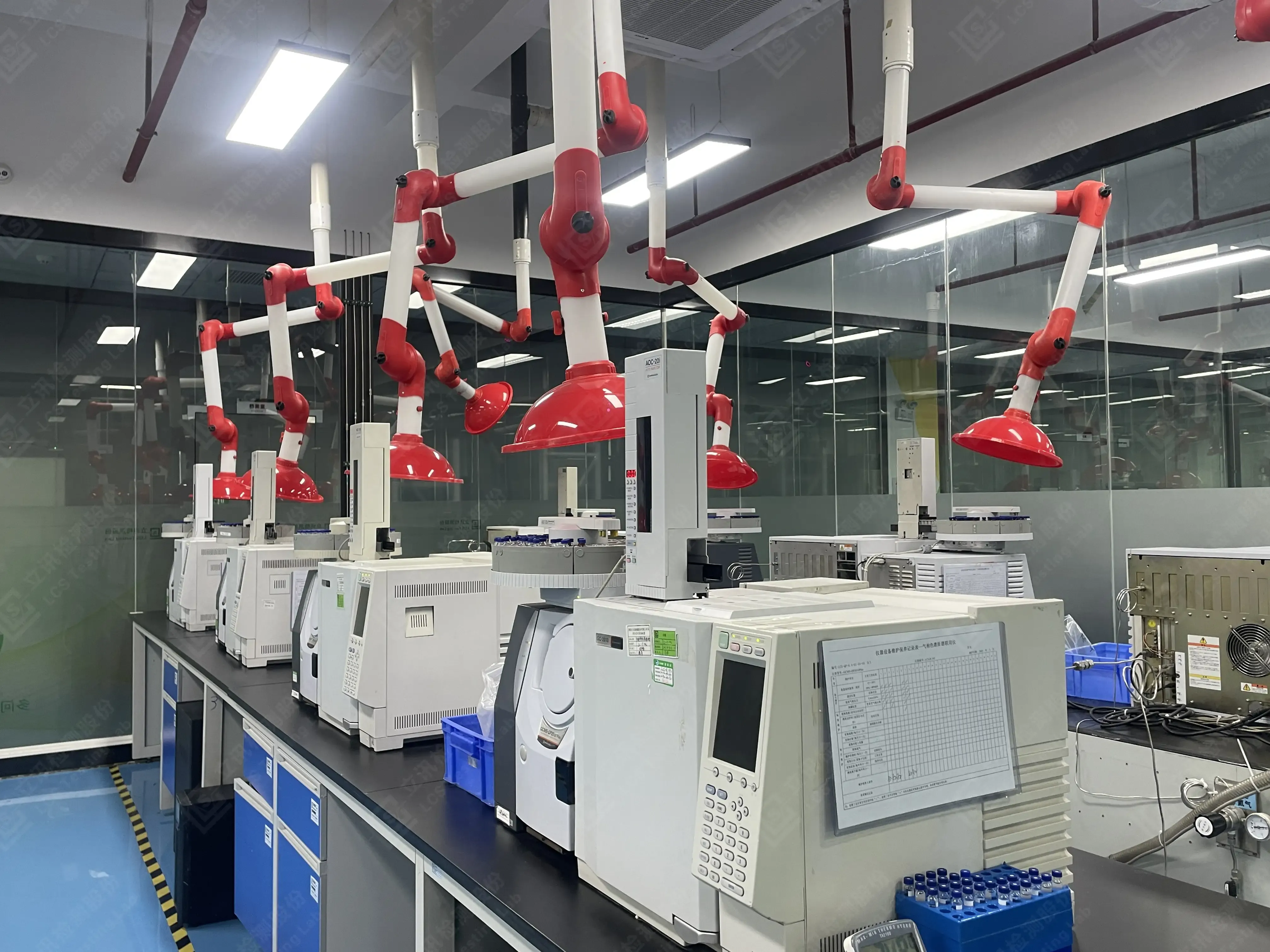
LCS's chemical and materials testing laboratory in Shenzhen handles restricted-substance and materials testing for consumer goods and electronics, and performs PFAS testing in its own laboratory. This covers PPWR-related testing scopes, including PFAS analysis of food-contact packaging and heavy-metals testing of packaging materials. The Chemical Testing service page on this site describes the laboratory's restricted-substances work; send your packaging materials and target market details to plan the test scope. Testing produces test reports; the conformity assessment and EU declaration of conformity remain with the manufacturer.
FAQ
Does PPWR apply to packaging made outside the EU?
Yes. It applies to packaging placed on the EU market, wherever it is produced; the EU importer must verify the manufacturer's conformity assessment and documentation.
Is a test report required to sell packaging in the EU?
Conformity assessment is internal production control performed by the manufacturer; test reports are supporting evidence, not a standalone requirement.