Oct 11, 2026Testing Standards
Toy Chemical Compliance: How Materials, Age Grade and Market Shape the Test Plan
How toy chemical requirements vary by material, age grade and market — EN 71-3, ASTM F963, CPSIA lead and phthalates, and China's GB toy coating rules.
Toys sit under several compliance regimes at once, and chemical safety is often the part that resists a one-size-fits-all test plan. A painted wooden rattle, a plush bear with a sound module and a battery ride-on can share an age grade yet face different chemical testing, because requirements follow the materials, the intended age, and the market where the product is sold. This explainer outlines how the main toy chemical frameworks work and what to prepare before commissioning testing.
Why the Material List Drives the Chemical Test Plan
Chemical requirements attach to what a child can touch, mouth or swallow, so the starting point is a full material breakdown rather than a picture of the finished product. Paints, varnishes, inks and other surface coatings are treated differently from the material underneath, because a coating can flake and be ingested; China's toy coating limits address that layer specifically. Plastics raise a different question — what is in the polymer and, in particular, which plasticizers soften it, which is why US phthalate rules focus on accessible plasticized components. Textiles may bring their own restricted substances, such as certain dyes and finishing agents. Electronics and battery assemblies are governed largely by electrical and electronic equipment rules, for example RoHS in the EU, and by battery safety standards such as IEC 62133-2 for lithium packs. Two products made from different materials therefore rarely share the same chemical scope.
How Age Grading Changes the Requirements
Age grading is not a marketing decision; it drives which chemical provisions apply. Regimes generally become stricter where mouthing is expected: EU rules provide for specific chemical limit values for toys intended for children under 36 months or otherwise intended to be placed in the mouth, and US phthalate restrictions reach child care articles for children up to three years old. The US children's product definition extends to age twelve for lead limits and third-party testing, so reclassifying a product changes its obligations. Documenting the age grade and its reasoning keeps the test plan aligned with the market; an incorrect grade can make a compliant product look non-compliant, or the reverse.
The Main Frameworks at a Glance
The EU. Directive 2009/48/EC sets the essential safety requirements for toys, including the chemical ones. It prohibits substances classified as carcinogenic, mutagenic or toxic for reproduction in toy parts, with narrow derogations, controls allergenic fragrances, and sets migration limits for elements; the recitals name arsenic, cadmium, chromium VI, lead, mercury and organic tin as particularly toxic and note that limits are set at half the level considered safe. The harmonised standard for the migration of elements is EN 71-3, while EN 71-1 covers mechanical and physical properties and EN 71-2 flammability; other parts of the series address specific chemical risks such as nitrosamines.
The US. ASTM F963 is the consumer safety specification for toys and is mandatory under the CPSIA. It covers mechanical and physical hazards, flammability, and toxicology, including heavy elements in paint and substrate with solubility limits. Separately, CPSIA limits lead in accessible parts of children's products to 100 ppm — parts inside sealed covers are exempt, and paint is not accepted as a barrier — and lead in paint and surface coatings to 90 ppm. Eight phthalates are restricted to 0.1% in accessible plasticized components of toys and child care articles. Children's products must be tested by a CPSC-accepted laboratory, and the manufacturer or importer issues the Children's Product Certificate on the basis of the test reports.
China. GB 24613-2009 was the mandatory standard for harmful substances in toy coatings until it was superseded, covering lead, soluble elements, phthalates, VOC and benzene-series solvents; it was issued in November 2009 and took effect in October 2010. China has since consolidated coating limits into the GB 30981 series, and GB 30981.2-2025 took effect on 1 June 2026, so sellers should confirm which reference the buyer or authority currently expects.
Chemical Testing Alongside Mechanical and Electrical Safety
Chemical testing is one strand of a toy safety programme. Mechanical and physical testing examines hazards such as sharp edges, small parts, cords and magnets; flammability testing examines how materials react to flame; and electrical safety for electric toys is addressed by IEC 62115. In the US, electrically operated toys also fall under mandatory rules separate from F963. These strands share the same sample and age grading, so planning them together avoids a second sampling round.
What to Prepare Before Testing
Before requesting a quotation, assemble the following: a material breakdown or BOM covering every component, especially paints, inks, adhesives, coatings and plasticized parts, with supplier information where available; the intended age grade and the reasoning behind it, including whether the toy is meant for mouth contact; the destination markets and the declarations or certificates you need to support; previous test reports or supplier declarations for unchanged materials; and production-consistent samples in quantities the laboratory confirms for your plan. A draft user manual and product photos help the laboratory match the test plan to the toy's actual use.
How LCS Supports Toy Chemical Testing
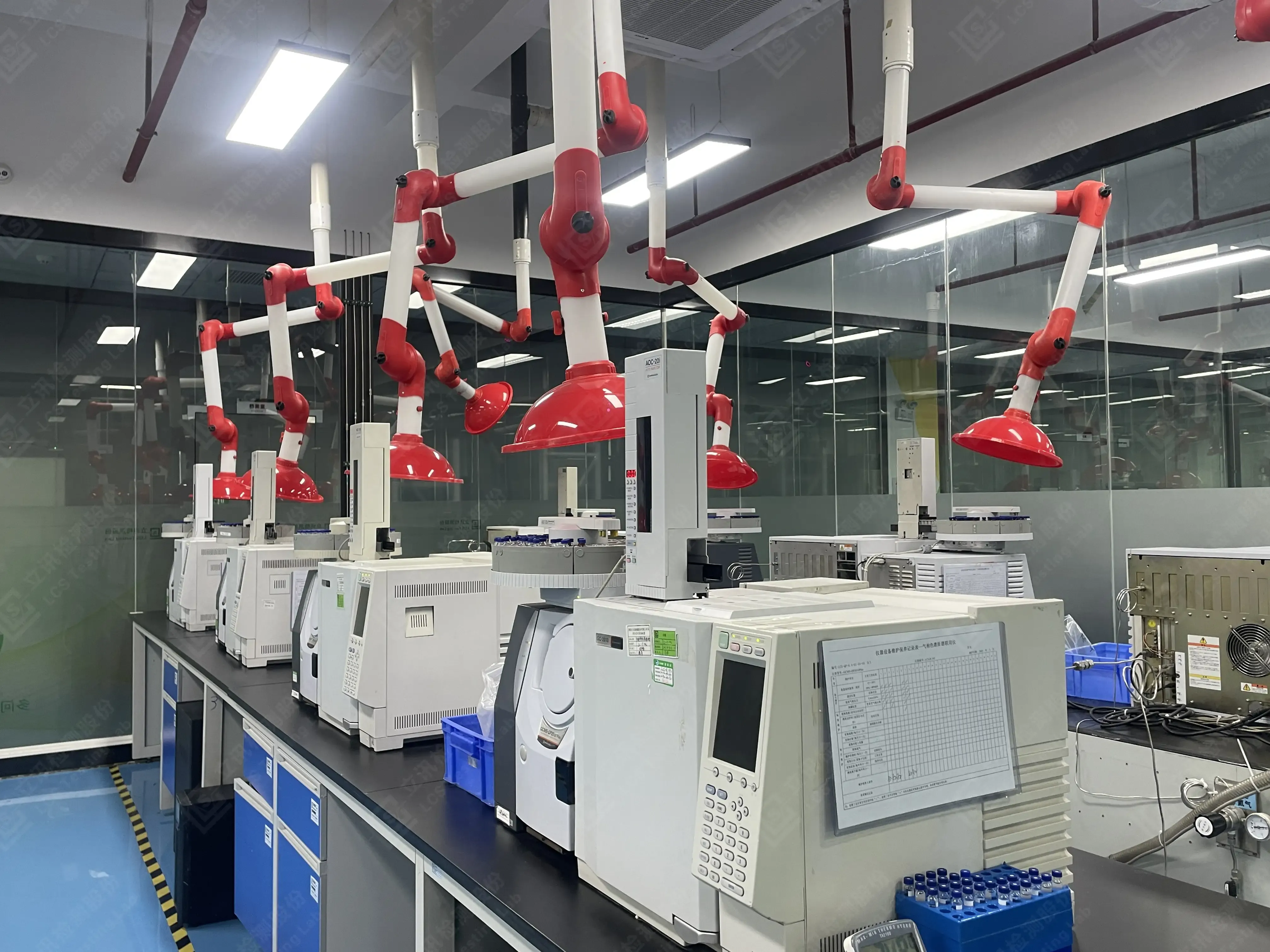
LCS is an independent third-party testing laboratory. Its verified scope for toys and children's products covers the EN 71 series, ASTM F963 including the F963-23 edition, and IEC 62115, with CPSIA phthalate testing by the CPSC method CPSC-CH-C1001-09.4 using GC-MS and, at its Shenzhen sites, GB 24613-2009 toy coatings. Testing produces a test report; where a market or scheme requires a certificate, it is issued by the relevant certification body, or by the manufacturer or importer as in the case of the Children's Product Certificate. The Toy Testing service page describes the laboratory's toy scope, and engineers confirm the exact test items, sample quantities and document requirements for each product.
FAQs
Is EN 71-3 the same as the heavy element testing in ASTM F963?
They address a similar family of risks but are separate frameworks with their own scope and limits. Products sold in both the EU and the US generally need the relevant testing under each.
Does every toy need phthalate testing for the US?
No. The restriction applies to accessible plasticized components of toys and child care articles, at 0.1% for eight phthalates; parts outside that scope are assessed accordingly.
Can one test report cover several markets?
Overlaps exist, but the frameworks are not interchangeable. Multi-market programmes are typically built as one plan that maps shared tests and adds market-specific ones.
Does LCS issue certificates?
LCS issues test reports. Certificates are issued by certification bodies or, as with the Children's Product Certificate, by the manufacturer or importer on the basis of testing.